Retrograde Bodies
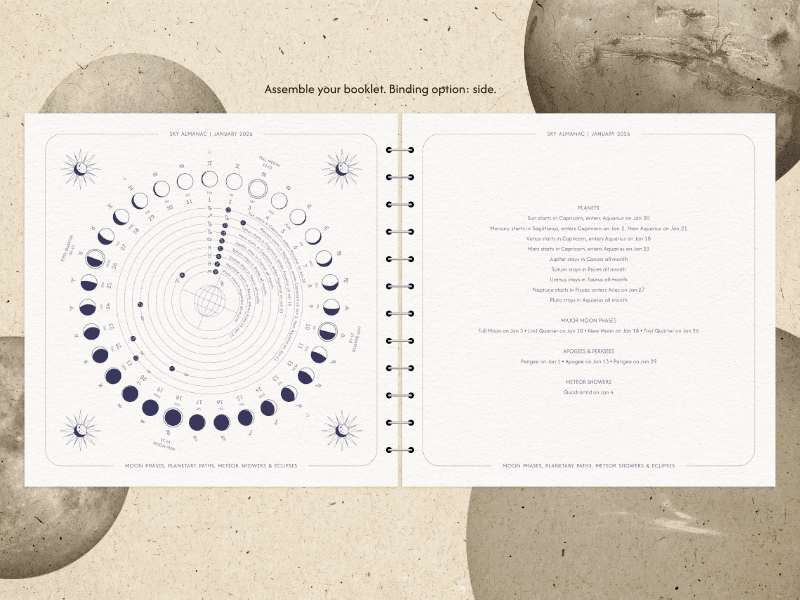
You’ve probably heard of retrograde planets. “Retrograde” doesn’t mean a planet truly reverses course—it means it appears to drift backward against the zodiac from our viewpoint on Earth, a sky-watching illusion born from relative motion. In astrology, that visual shift is read like a change of tone: the same planet, but speaking more inwardly, asking for review instead of pure forward push.
Mercury Retrograde
Mercury retrograde happens several times a year and gets the biggest reputation. It can feel like messages tangle, plans reroute, and devices suddenly develop opinions. The cleaner way to hold it: Mercury invites you to slow the pace, double-check details, and say the thing again—more clearly, more consciously.
Venus Retrograde
Venus turns retrograde far less often—about every year and a half—and it tends to spotlight value: love, pleasure, money, and what you’re willing (or not willing) to compromise for. Old desires can resurface, relationships can ask for honesty, and spending habits may reveal what you truly prioritize.
Mars Retrograde
Mars retrograde comes roughly every couple of years and can feel like the engine is running, but the wheels aren’t gripping. Motivation may dip, frustration can rise, and your usual “go” gets replaced with a slower, more deliberate kind of power. It’s a good season for strategy: refine the aim, rebuild strength, choose battles that matter.
Jupiter, Saturn, Uranus, Neptune, and Pluto Retrograde
The outer planets retrograde for long stretches each year, more like tides than weather. Because they move slowly, their retrogrades often read as deep adjustments—beliefs, structures, awakenings, dreams, and transformations working from the inside out. The changes may not be loud, but they can be lasting.
Retrogrades can feel inconvenient, sure—but they’re also generous. They make space to revisit, repair, and realign. Less “everything is broken,” more “let’s tune the signal.”